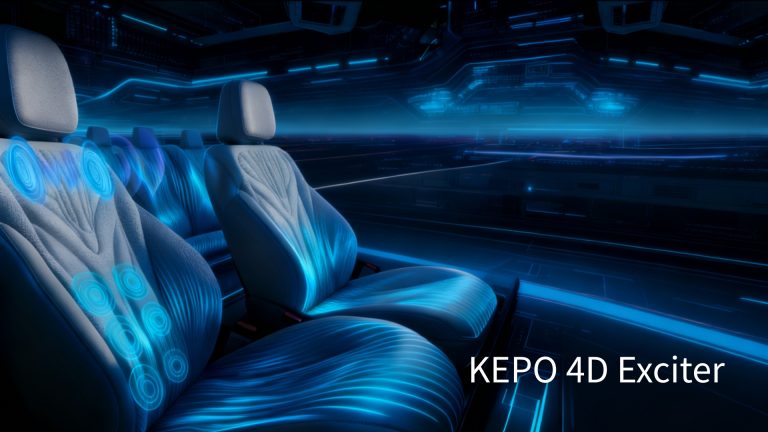
Während aktuelle DMS den Zustand des Fahrers genau erkennen können, In der Interaktionsphase kommt es häufig zu Engpässen. Visuelle Hinweise werden leicht übersehen, und akustische Alarme können aufdringlich sein. Aus Produktsicht, Der Wert eines Sitzvibrationssystems liegt darin, dem DMS eine Systemebene zu bieten, sehr gut wahrnehmbar, und störungsarme interaktive Lösung.
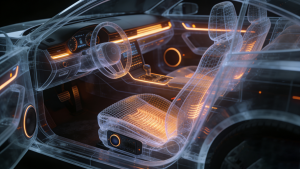
Unsere Kernlogik besteht darin, Vibration zu einer präzisen haptischen Sprache zu machen. Es ist nicht einfach ein “summen,” sondern vielmehr eine taktile Ausgabe, die auf der Grundlage zusammengeführter Daten von DMS und ADAS intelligent vermittelt wird. Wenn das System eine leichte Ablenkung erkennt, Ein sanfter Puls fühlt sich an wie ein Klopfen auf die Schulter; bei einem Spurverlassen, Die Vibration tritt genau auf der entsprechenden Seite des Sitzes auf, Bereitstellung einer intuitiven räumlichen Führung; und angesichts der Gefahr eines Frontalzusammenstoßes oder schwerer Ermüdung, hohe Intensität, Die Vibration des Außenverteidigers erzielt eine effektive Wirkung “Haptisches Aufwachen.”
Erkennen, dass diese Erfahrung auf drei Schlüsseltechnologien beruht: Die verteilte Vibrationsarray-Hardware bildet die physikalische Grundlage für eine genaue Lokalisierung; Als Grundlage dafür dienen multimodale Datenfusionsalgorithmen “Gehirn,” Festlegung von Feedback-Strategien; und eine sorgfältig kalibrierte “haptisches Vokabular” sorgt dafür, dass die Interaktion intuitiv und komfortabel ist, Dadurch wird eine Belästigung des Benutzers vermieden.
Sicherheit ist der Grundstein dieses Systems, aber nicht in seiner Gesamtheit. Beim Abschluss des Sicherheitskreislaufs mit DMS, Dieses System wird selbstverständlich auch zum haptischen Port der Kabine. In sicheren Szenarien kann in einen audiovisuellen 4D-Unterhaltungsmodus gewechselt werden, Bereitstellung eines immersiven Erlebnisses und letztendlich Schaffung einer neuen Dimension für die Gestaltung der Markendifferenzierung.
Unser Ziel ist es, die haptische Interaktion von einer reinen Funktion zu einer intelligenten Sprache zu entwickeln, die nahtlos mit dem Benutzer kommuniziert.