デフォルト言語として設定
 翻訳を編集

KEPO 4D Exciter II: Seat Haptic Feedback for Smart Cockpit Interaction

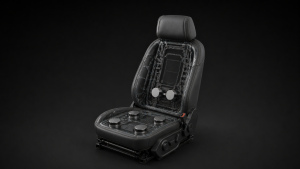
KEPO 4D Exciter II is a seat-integrated haptic feedback system for smart cockpit and automotive seating applications. It uses vibration units built into the seat structure and software-defined haptic patterns to let occupants feel selected vehicle, エンターテインメント, 快適, and safety-related information through the seat.
安全に関する警告

KEPO 4D Exciter II is a seat-integrated haptic feedback system for smart cockpit and automotive seating applications. It uses vibration units built into the seat structure and software-defined haptic patterns to let occupants feel selected vehicle, エンターテインメント, 快適, and safety-related information through the seat.

For OEMs, 階層 1 seat suppliers, and smart cockpit system developers, KEPO 4D Exciter II provides a flexible way to add tactile feedback to the vehicle interior. The same seat haptic platform can support music rhythm feedback, safety alert feedback, multi-zone massage comfort, and game or entertainment interaction, depending on the vehicle program and integration requirements.

This article explains what KEPO 4D Exciter II is, how seat haptic feedback can be used in a smart cockpit, and which application scenarios it can support.

What Is KEPO 4D Exciter II?

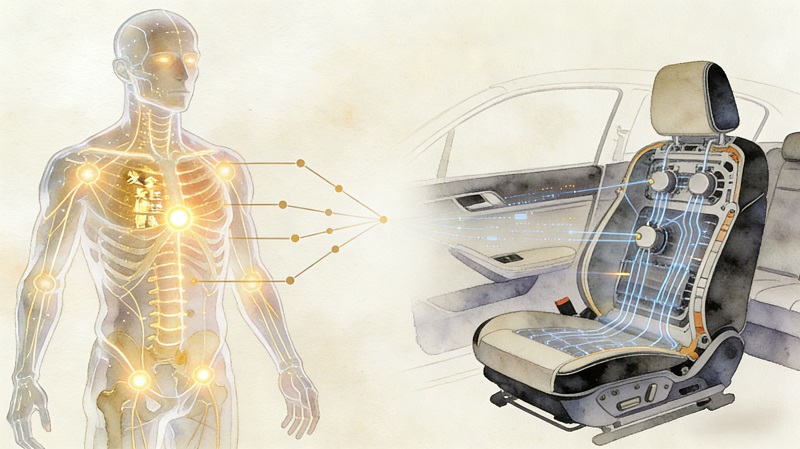
KEPO 4D Exciter II is an automotive seat haptic feedback solution. It integrates vibration units into selected seat areas, such as the backrest, seat cushion, or leg-support area, and uses controlled vibration patterns to create tactile feedback.

Unlike a single-purpose vibration device, KEPO 4D Exciter II is designed as a software-defined haptic platform. Different feedback patterns can be developed for different cockpit functions, including entertainment, warning alerts, massage comfort, and passenger interaction.

In a smart cockpit, the seat is no longer only a support and comfort component. It can also become a human-machine interface that works together with audio, 点灯, ディスプレイ, and vehicle control systems.

What Problems Can Seat Haptic Feedback Help Solve?

Vehicle interiors are becoming more digital, but drivers and passengers cannot rely only on screens and speakers for every interaction. Visual channels can be overloaded, and audible alerts may compete with music, ナビゲーション, voice prompts, and road noise.

Seat haptic feedback adds another communication channel. Because the signal is felt directly through the body, it can support intuitive interaction without adding more visual information to the dashboard or center display.

Key Applications of KEPO 4D Exciter II

1. Music Rhythm Feedback

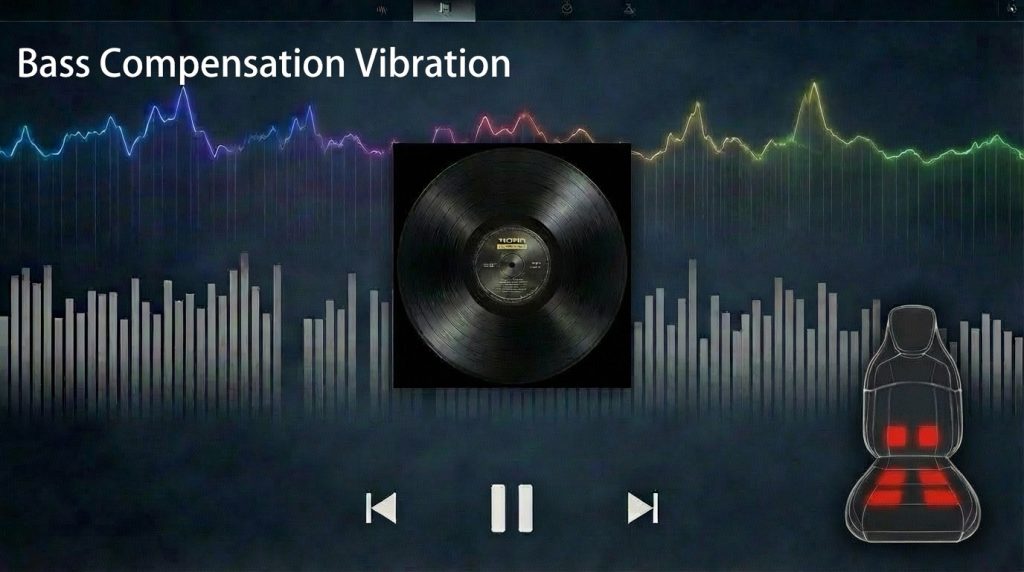
KEPO 4D Exciter II can work with the in-vehicle audio system to convert rhythm, ベース, and selected low-frequency sound effects into seat vibration.

When music intensity changes, the seat can provide synchronized tactile feedback. Passengers do not only hear the beat; they can also feel it through the seat.

The system can also be combined with ambient lighting. When cabin lighting responds to music rhythm, color theme, or driving atmosphere, seat vibration adds another sensory layer. Sound, ライト, and haptic feedback can work together to create a more immersive in-cabin experience.

For OEMs and cockpit experience teams, music rhythm feedback can help extend audio entertainment into a multisensory seat experience.

音楽のリズム

2. Safety Alert Feedback

Seat haptic feedback can be used as an additional safety alert channel. It does not replace visual warnings, audible alerts, or the vehicle’s existing safety systems. Instead, it provides another way for the driver to perceive selected warning information.

In complex driving environments, the driver’s visual and auditory attention may already be occupied by the road, mirrors, instrument cluster, navigation system, voice prompts, そして周囲の騒音. A clear vibration through the seat can help communicate a warning without asking the driver to look away from the road.

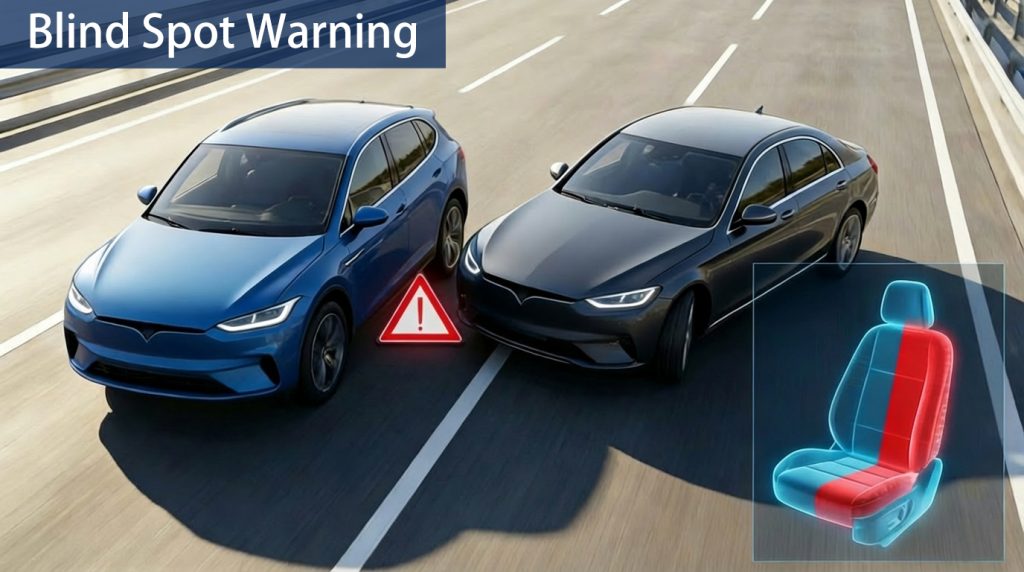
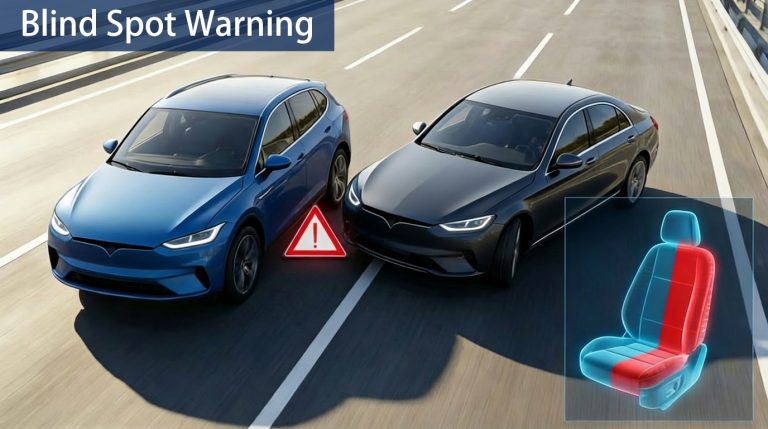
KEPO 4D Exciter II can support distinguishable haptic patterns for scenarios such as blind spot warning, driver monitoring alerts, and following-distance alerts.

死角警告

In a BSW (死角警告) scenario, when the driver activates the turn signal or prepares to change lanes, the vehicle may detect another vehicle in the left-rear or right-rear blind spot.

The seat can provide directional vibration on the corresponding side. This helps the driver feel both the warning and its direction, adding a tactile layer to lane-change decision support.

Driver Monitoring Alerts

When a DMS (ドライバーモニタリングシステム) detects fatigue, distraction, or reduced attention, the seat can deliver a recognizable tactile reminder. This helps prompt the driver to refocus or take appropriate action.

Following-Distance Alerts

When the vehicle safety system detects that the distance to the vehicle ahead is too short, the seat can generate a short and distinct vibration pattern. This can help the driver notice the risk and adjust following distance in time.

死角警告

3. Multi-Zone Massage Comfort

KEPO 4D Exciter II can also support seat comfort functions.

By arranging vibration units in different seat areas, the system can provide haptic output across multiple body zones. The backrest can provide upper-body feedback, the seat cushion can support rhythmic comfort during long journeys, and the leg-support area can improve rear-seat comfort in premium or executive seating applications.

Through software control, vibration zones, intensities, and rhythm patterns can be combined into different massage modes. These modes can be adapted for daily relaxation, long-distance travel, and rear-seat comfort scenarios.

For vehicle programs that require both comfort and intelligent interaction, one software-defined seat haptic platform can help support several user experiences through a shared hardware base.

シートマッサージ

4. Game and Entertainment Feedback

As in-vehicle entertainment evolves, gaming and interactive media are becoming part of parked, passenger, and rear-seat entertainment scenarios.

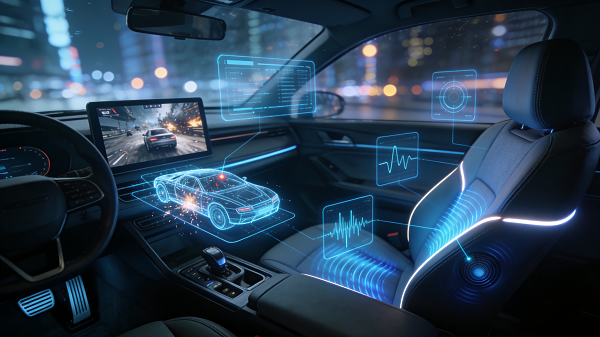
KEPO 4D Exciter II can translate selected game events into physical seat feedback. In a racing game, 加速度, road texture, drifting, collision, and low-frequency engine effects can be represented through different vibration patterns. In action, adventure, or rhythm-based experiences, impact and movement can also be reflected through haptic feedback.

Passengers can see, hear, and feel key events at the same time. This adds a tactile dimension to in-vehicle entertainment and helps make the smart cockpit experience more interactive.

ゲームのフィードバック

Integration and Customization for Vehicle Programs

KEPO 4D Exciter II is intended for seat-integrated haptic feedback development. The final layout and feedback logic depend on the seat design, vehicle platform, target user experience, and system integration requirements.

Typical integration topics may include:

  • Seat zone layout, such as backrest, cushion, and leg-support areas
  • Haptic pattern design for entertainment, 快適, warning, or passenger interaction
  • Coordination with audio, 環境照明, driver monitoring, and other smart cockpit systems
  • Custom development for different vehicle programs and brand experience requirements
  • Public claim boundaries for specifications, テスト, certifications, or project references

Because each vehicle program has different structure, コントロール, and user experience requirements, KEPO recommends discussing application goals and integration conditions before defining the final haptic solution.

Why Seat Haptic Feedback Matters in Smart Cockpits

Smart cockpit interaction is moving beyond screens and speakers. As vehicles add more digital functions, occupants need interaction methods that are intuitive, comfortable, and easy to understand.

Seat haptic feedback gives the vehicle another way to communicate. It can make entertainment more immersive, comfort functions more flexible, and selected alerts more direct.

For automotive interior system developers, this makes the seat an important interaction point. KEPO 4D Exciter II helps expand the seat from a passive comfort component into a software-defined haptic interface for smart vehicles.

Discuss a Seat Haptic Feedback Project with KEPO

If you are developing a smart cockpit, automotive seat, or multisensory interior experience, KEPO can support discussions around 4D Exciter II integration, haptic feedback applications, and customized development solutions.

Contact us at [email protected] to discuss your project requirements, sample needs, or technical development plan.

共有:

他の投稿

環境光 (3)

自動車アンビエント照明の 3 つの照明方法の分析

車の中, さまざまな性質の光を観察できることがよくあります: 一部の光線はシャープでクリアです, 他は柔らかくて均一, 一部は車両自体の内部から発生しているように見えます. この背後にある理由は、アンビエント照明のさまざまな照明方法にあります。, 間接的な (反射性の), そして透過照明.

ChatGPT 画像 2026 年 5 月 13 日 10 56 22 (1)

車両外側に 2 つのワークステーション: 水たまりランプとロゴランプを量産中

過去10年間にわたって, 量産車両の外部照明は、夜間の視認性という単一の機能から一連の個別のワークステーションに拡張されました。. そのうちの2人, 出入口部の水たまりランプとボディのロゴランプ, 高級セグメントの差別化からミッドエンドからハイエンドの電動プラットフォームに移行しました. KEPO は両方の製品ラインで連続生産プログラムを行っています.

メールで直接連絡する

解決策や助けが必要な場合, お問い合わせください [email protected] 直接.

内で対応します 12 時間. サフィックスが付いているメールにご注意ください 「@kepotech.com」.