
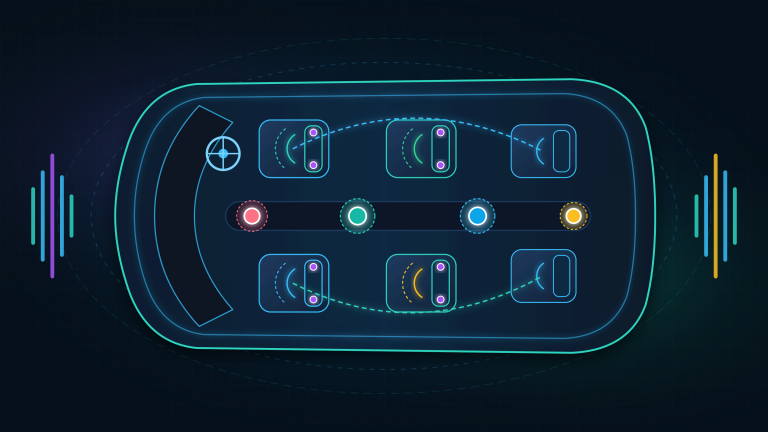
For decades, an automotive interior microphone served a single purpose: capturing the driver’s voice for hands-free phone calls. In modern electric and intelligent vehicles, however, the cabin has evolved into a multi-passenger living space—where every seat expects independent voice control, quieter acoustics, effortless cross-row conversation, and reliable emergency communication.
By deploying custom automotive in-cabin microphone modules across the interior, OEMs and Tier-1 suppliers build an acoustic foundation spanning four core applications.
1. Multi-Zone Voice Pickup & Active Cabin Noise Control (ANC / RNC)
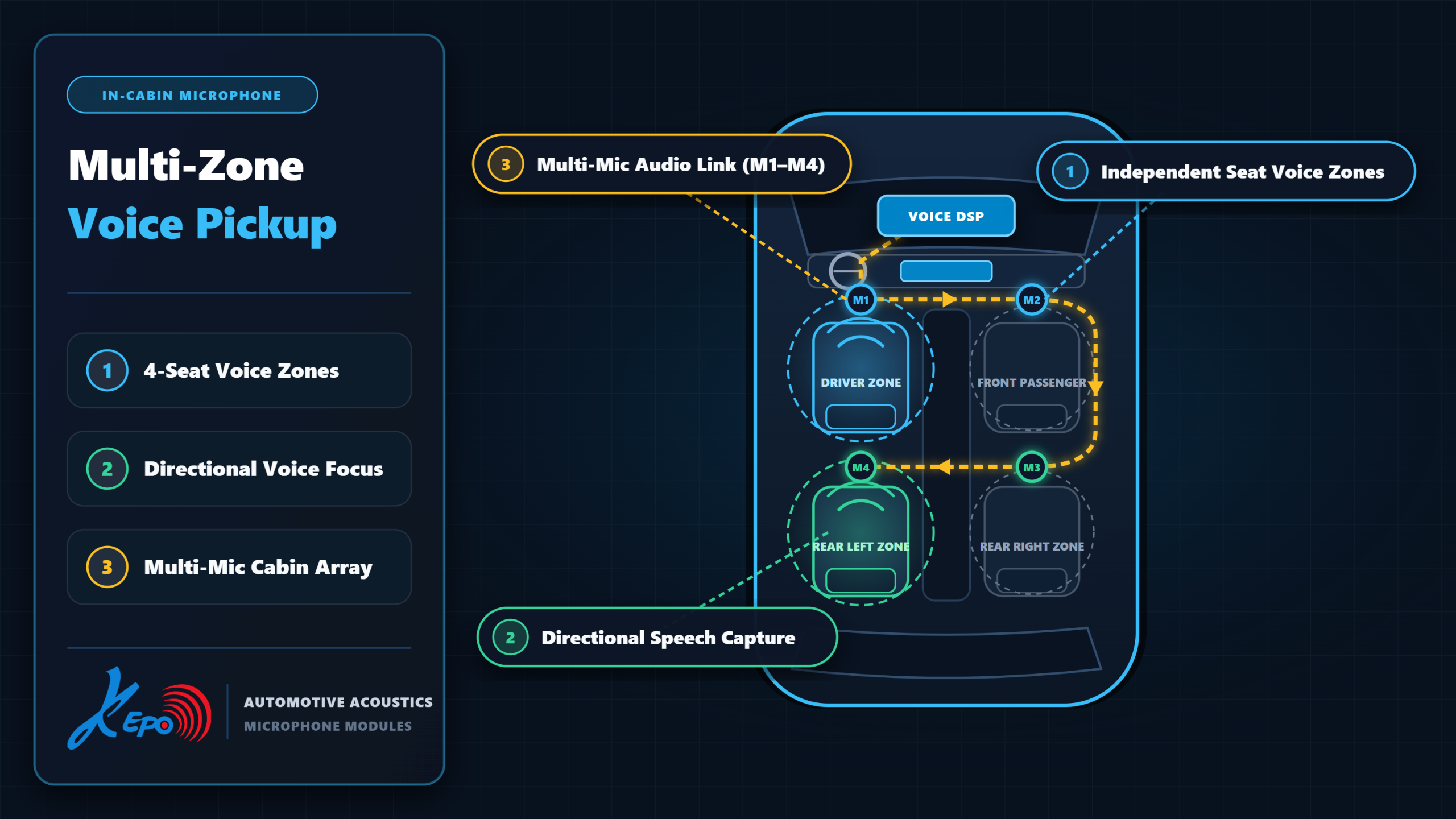
Instead of relying on a single front microphone, modern smart cockpits use distributed in-cabin microphone modules covering the driver, front passenger, and rear seating zones. Through directional speech capture and multi-microphone coordination, the system isolates which seat is speaking and responds accurately to zone-specific commands—such as adjusting individual climate settings, windows, or seat functions—even in a full cabin.
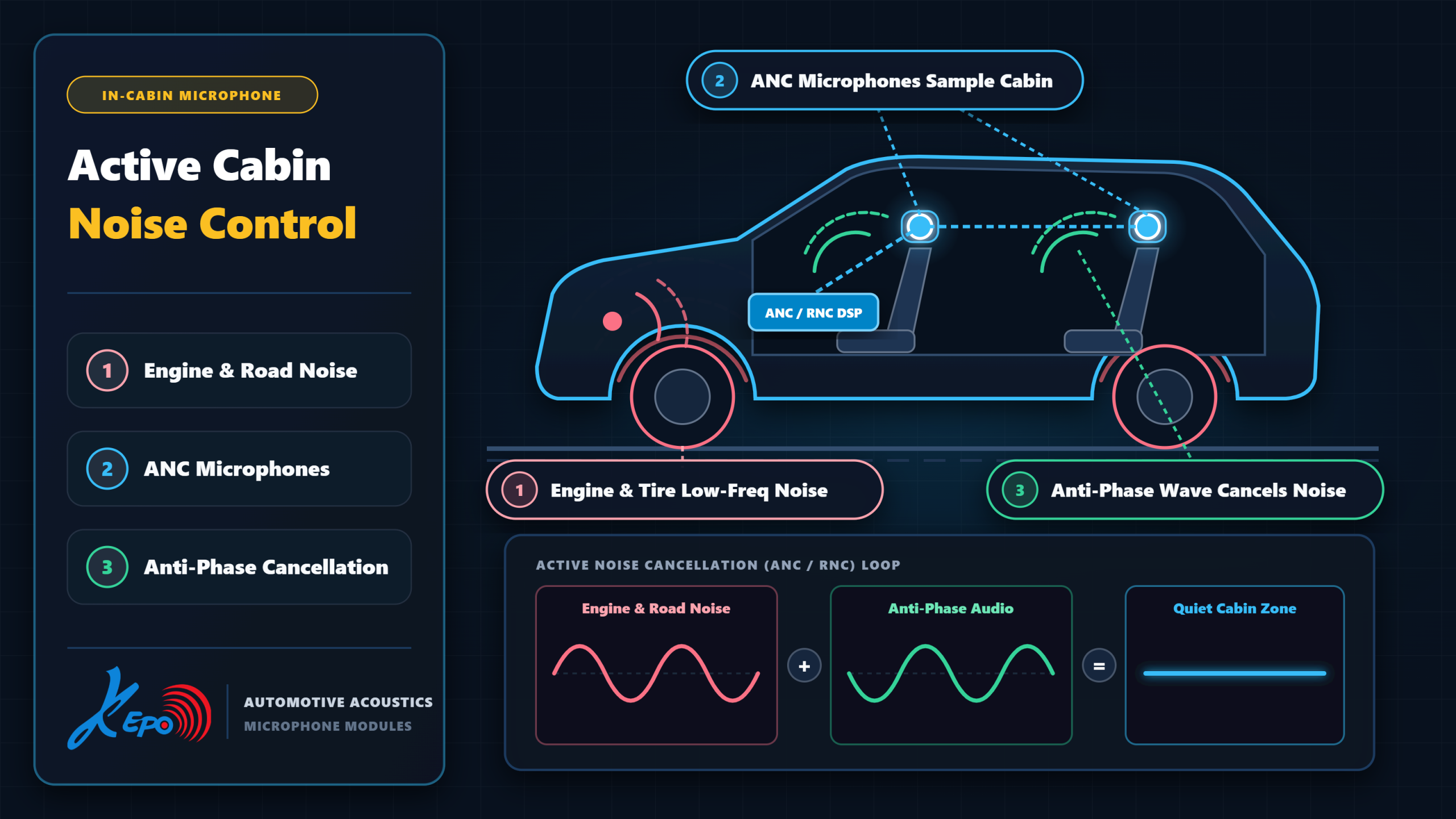
At the same time, low-frequency engine booming and tire-induced road rumble are difficult to block with passive insulation materials alone without adding significant vehicle weight. By positioning ANC microphones at the seat headrests close to the occupants’ ears, the system samples residual low-frequency engine and road noise in real time—enabling the audio system to generate anti-phase sound waves that cancel unwanted noise and maintain a quiet cabin zone.
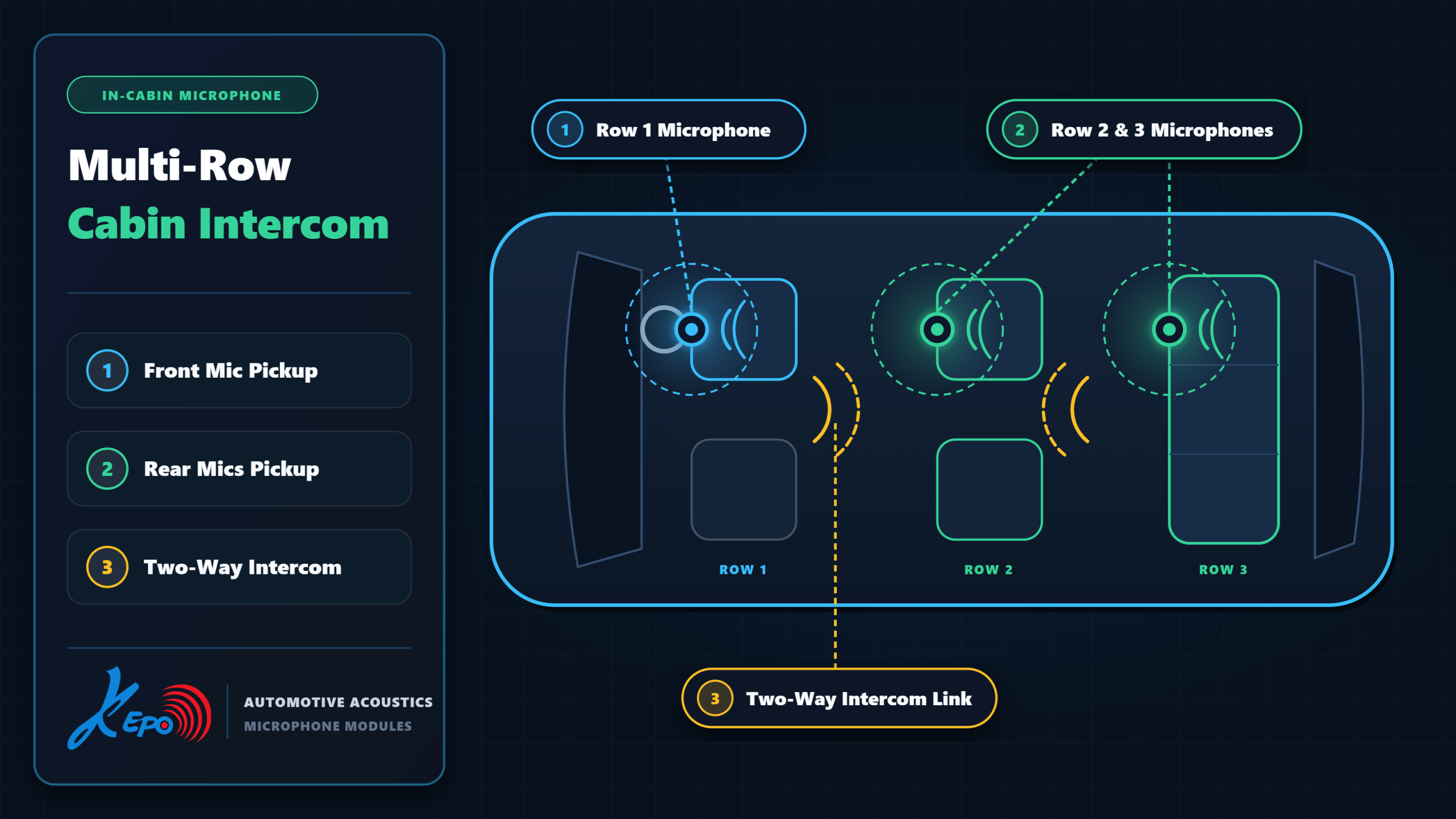
2. Emergency eCall Voice Link & Multi-Row Cabin Intercom (ICC)
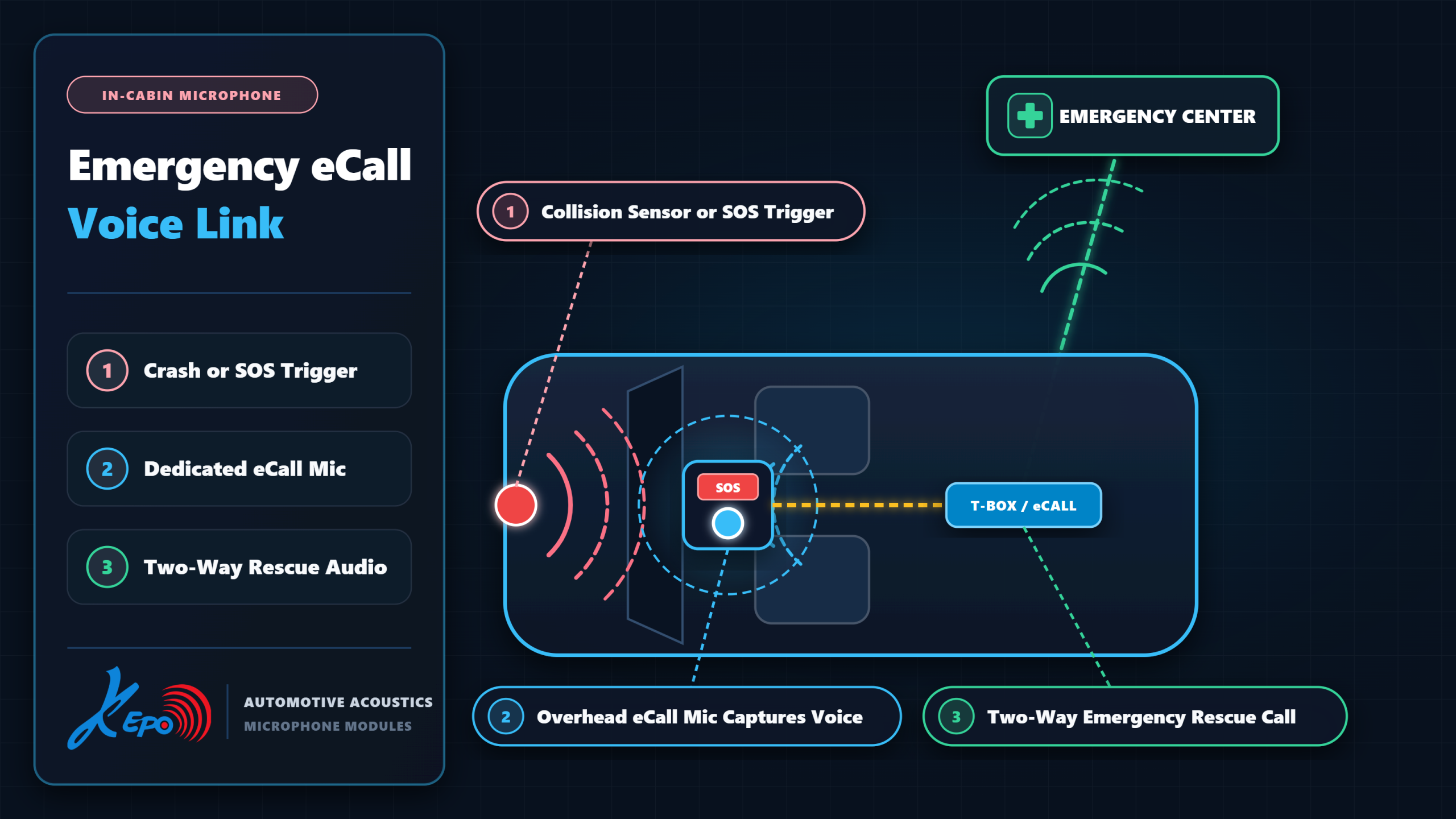
In an emergency, a clear and dependable voice link between vehicle occupants and rescue operators is essential. Whether triggered automatically by collision sensors during a crash or manually via the overhead SOS button, a dedicated overhead eCall microphone module captures cabin speech clearly—supporting two-way hands-free communication with emergency rescue centers worldwide.
In three-row SUVs and MPVs, cabin length and background noise often force drivers to raise their voices or turn around to talk with passengers in the back. By placing in-cabin microphone modules across Row 1, Row 2, and Row 3 seating zones, a Multi-Row Cabin Intercom (ICC) system captures speech in both directions—allowing front and rear passengers to converse naturally without turning around.
What Matters in In-Cabin Hardware & Series Production
Delivering consistent acoustic performance across millions of vehicles requires disciplined hardware design and manufacturing execution:
Acoustic Sealing & Interior Fit
Precision-molded housings, internal acoustic gaskets, and protective mesh that prevent sound leakage and dust intrusion while fitting seamlessly into overhead consoles, headliners, and headrests.
Flexible Analog & Digital Integration
Compatibility with both analog and digital microphone interfaces, paired with custom wire harnesses and automotive connectors tailored to each vehicle platform.
Tight Sensitivity & Phase Consistency
Narrow sensitivity and phase tolerances across modules—verified through 100% End-of-Line (EOL) testing—to support multi-microphone voice pickup, cabin intercom, and active noise cancellation.
As smart cockpits demand higher acoustic clarity at every seat, kepo technologies supports OEMs and Tier-1 suppliers with custom in-cabin microphone module development, tooling, and series production.
Contact Our Team →