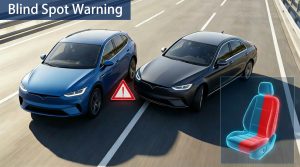
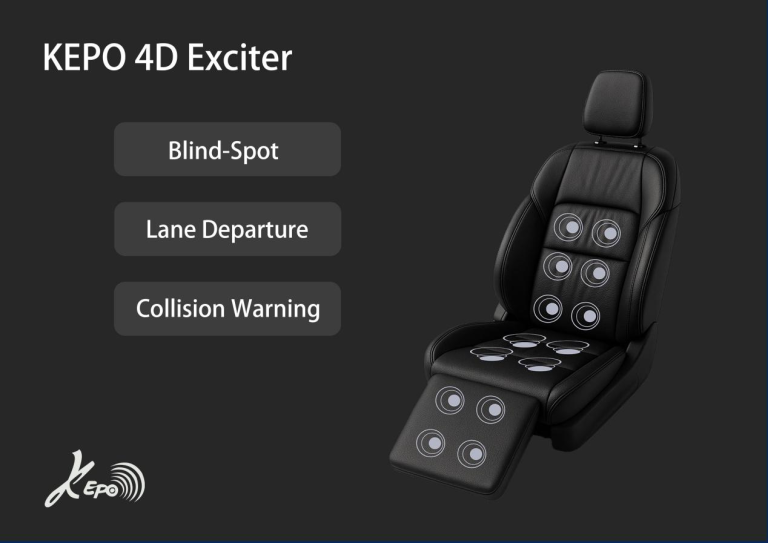
The National Highway Traffic Safety Administration (NHTSA) is continuously advancing stricter safety alert regulations. Seat haptic vibration systems are no longer merely an experiential feature but are poised to become a potential compliance requirement. For OEMs and Tier 1 suppliers, this presents both a challenge and a strategic opportunity to transform compliance costs into product value through technological foresight.
Recent developments from NHTSA demand attention:
The revision of FMVSS No. 208 now mandates seat belt reminder systems for rear seats and strengthens warning requirements for front seats.
An update to FMVSS No. 207, “Seat Systems,” is also in the pipeline.
These initiatives highlight a clear trend: multi-sensory, redundant safety alerts are becoming essential to address driver and passenger oversight. Beyond visual and auditory signals, the introduction of an unignorable tactile channel is emerging as the next logical step in regulatory evolution. The integration of haptic vibration with seat belt reminders and Driver Monitoring Systems (DMS) is highly likely to become mandatory. Rather than reacting passively, proactively embedding compliance into next-generation platform architectures is the way forward.
Turning Compliance into Competitive Advantage
Deploying mature vibration solutions in advance ensures global market access and streamlined product launch timelines. When basic compliance becomes universal, user experience will be the key differentiator.
Our solutions are designed to help you lead this transition:
Software-Defined Haptics: Enable unique brand-alert signatures—such as gentle pulses for warnings and intense vibrations for emergencies—creating memorable safety experiences.
Scalable Full-Stack Architecture: From entry-level to premium models, our unified control unit and software platform allow flexible scaling by adjusting actuator configurations.
Seamless Vehicle Integration: With low-latency, high-reliability communication, our system connects seamlessly with ADAS domain controllers, DMS, and body control modules. For instance, when DMS detects driver distraction coupled with lane drifting, the system triggers earlier and more targeted zonal vibrations, forming a closed-loop “Sense-Decide-Act” safety mechanism.
The regulatory tide is turning. Those who ride it early will shape the industry’s future. Seat vibration systems are transitioning from an optional feature to a standard component of intelligent safety.